
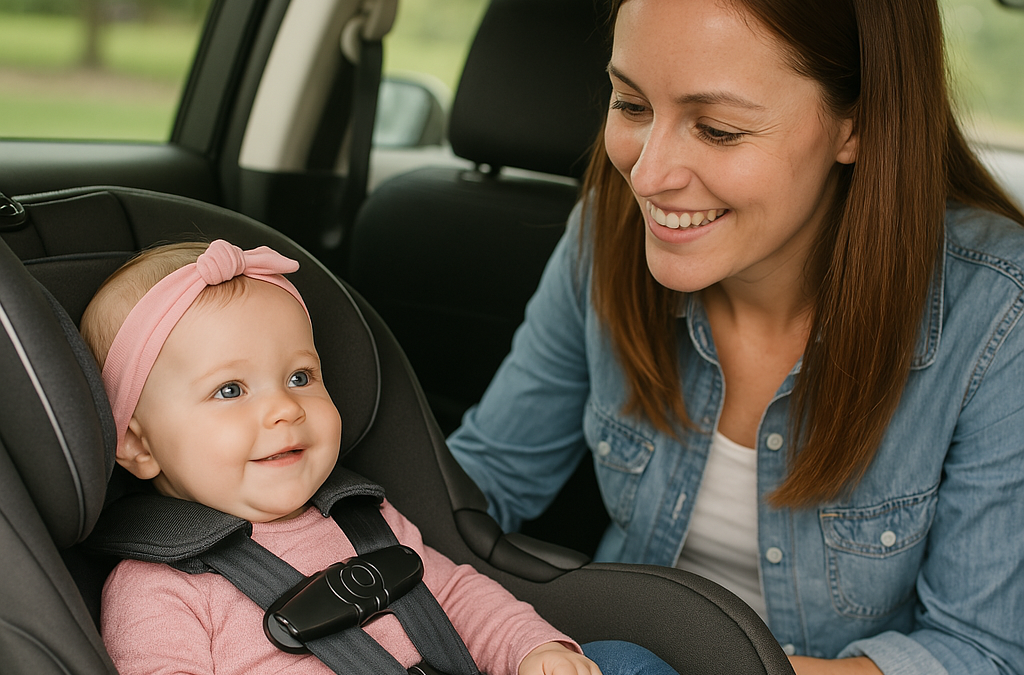
How to Properly Protect Your Child Every Time You Drive
Car crashes are a leading cause of injury and death for children in the United States. The single most effective way to protect your child is using the right car seat — and using it correctly every time.
Yet studies consistently show that nearly half of all car seats are installed or used incorrectly, dramatically reducing their effectiveness.
Car Seat Safety Week is a reminder for parents and caregivers to check their child’s car seat and ensure it provides the protection it was designed for. This guide combines essential car seat safety tips to help you avoid the most common and dangerous mistakes.
Why Proper Car Seat Use Matters
A properly installed and used car seat can reduce the risk of serious injury or death by more than 70%.
Car seats protect children by:
- Distributing crash forces across stronger parts of the body
- Preventing ejection from the vehicle
- Supporting the head, neck, and spine
- Reducing movement during impact
But these benefits only work when the seat is installed and used correctly.
The Most Important Rule: Keep Children Rear-Facing as Long as Possible
Rear-facing is the safest position for young children.
Rear-facing seats protect the head, neck, and spine by supporting the entire body during a crash.
Children should remain rear-facing until they reach the maximum height or weight limit allowed by the car seat manufacturer — not based on age alone.
Many children can safely remain rear-facing until age 3 or 4.
Harness Safety: Getting the Fit Exactly Right
Proper harness fit is critical.
Follow these key steps:
Chest Clip Position
The chest clip should be positioned at armpit level, not on the abdomen or neck.
Harness Tightness: The Pinch Test
Try to pinch the harness strap at the shoulder.
- If you can pinch material, it’s too loose
- If you cannot pinch material, it’s tight enough
Strap Position
- Rear-facing: straps at or below shoulders
- Forward-facing: straps at or above shoulders
Avoid Bulky Clothing Under the Harness
Bulky clothing, like winter jackets, prevents the harness from tightening properly.
In a crash, bulky clothing compresses — leaving the harness too loose to protect your child.
Instead:
- Secure your child without bulky clothing
- Place blankets over the harness for warmth
Correct Installation: The Foundation of Car Seat Safety
A properly installed car seat should move less than one inch side-to-side or front-to-back at the belt path.
Installation options include:
- LATCH system
- Seat belt installation
Both are safe when used correctly. Never use both unless the manufacturer allows it.
Always follow:
- Car seat manufacturer instructions
- Vehicle owner’s manual
Common Car Seat Mistakes That Put Children at Risk
Avoid these frequent errors:
- Turning children forward-facing too soon
- Loose harness straps
- Chest clip positioned incorrectly
- Loose installation
- Using expired car seats
- Using seats after a crash
- Incorrect recline angle
Small mistakes can have serious consequences.
Car Seat Safety Isn’t Just About Equipment — It’s About Preparation
Even when used correctly, accidents can still happen.
Would you know what to do if your child:
- Became unresponsive after a crash
- Stopped breathing
- Choked
- Experienced a medical emergency in the vehicle
CPR and First Aid training prepares you to act immediately.
Brain injury can begin in just 4–6 minutes without oxygen.
Knowing CPR gives you the ability to protect your child when every second matters.
Make Sure You’re Fully Prepared to Protect Your Child
Installing a car seat correctly is essential.
Knowing CPR is lifesaving.
Home Hazard Prevention provides firefighter-led, mobile CPR, AED, and First Aid training brought directly to your home, workplace, or parenting group.
Learn infant and child CPR.
Learn choking response.
Gain confidence and peace of mind.
Call or text 480-448-0266 today to schedule your CPR training.
Because protecting your child doesn’t stop when the car seat is installed — it continues with your ability to act in an emergency.