How to Protect Children from Medications, Household Chemicals, and Battery Hazards
Most parents don’t realize how quickly a poisoning emergency can happen — and how common the dangers are inside their own home.
Everyday items like prescription medications, cleaning supplies, and small button batteries can cause serious injury or death if accessed by children.
Poisoning is one of the leading causes of injury in young children, largely because children are naturally curious and explore their environment by touching and tasting objects.
The good news is that most poisoning incidents are preventable with simple safety steps and proper preparation.
This guide combines the most important medication safety, poison prevention, and battery safety tips to help protect your family.
The Hidden Danger of Prescription and Over-the-Counter Medications
Medications are one of the most common causes of poisoning in children.
Even small amounts of adult medication can be extremely dangerous or fatal to a child.
Common high-risk medications include:
- Pain relievers
- Heart medications
- Blood pressure medications
- Diabetes medications
- Sleep aids
- Vitamins and supplements
Children may mistake medicine for candy, especially if they see adults taking it regularly.
Medication Safety Tips Every Parent Should Follow
- Store all medications locked and out of reach
- Never leave medications on counters, nightstands, or bags
- Always use child-resistant containers
- Close caps immediately after use
- Never refer to medicine as “candy”
- Keep purses, backpacks, and travel bags out of reach
Even a moment of access can lead to a medical emergency.
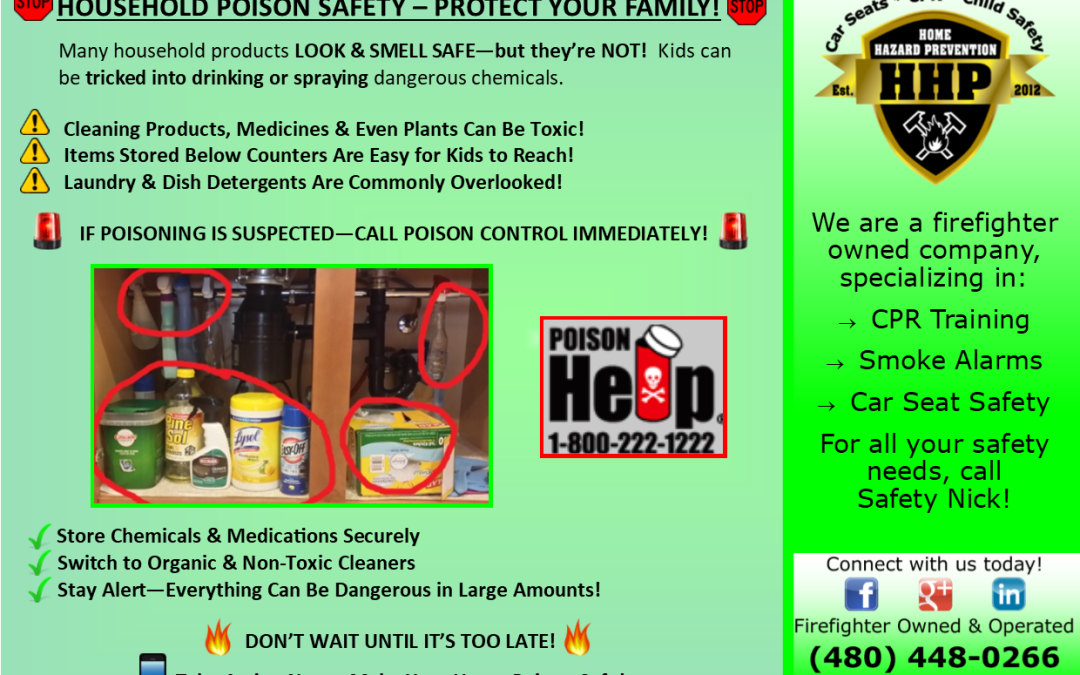
Household Cleaning Products and Chemicals: Serious Risks in Everyday Spaces
Household cleaning products are another major poisoning hazard.
Dangerous items include:
- Bleach
- Laundry pods
- Dishwashing detergent
- Drain cleaners
- Disinfectants
- Automotive fluids
Many of these products contain chemicals that can cause burns, breathing problems, or poisoning if swallowed or inhaled.
Prevention Tips
- Store chemicals in locked cabinets
- Keep products in original containers
- Never transfer chemicals into food or drink containers
- Install cabinet locks
- Store products high and out of reach
Supervision and secure storage are key.
Button Battery Safety: A Small Object with Life-Threatening Risk
Button batteries are especially dangerous because of their size and chemical composition.
If swallowed, button batteries can cause severe internal burns in as little as two hours.
They are commonly found in:
- Remote controls
- Key fobs
- Toys
- Hearing aids
- Watches
- Flameless candles
Button Battery Safety Tips
- Keep batteries locked and out of reach
- Secure battery compartments with screws
- Dispose of used batteries immediately and safely
- Store new batteries securely
- Check household devices regularly
Button battery ingestion is a medical emergency requiring immediate care.
Know the Signs of Possible Poisoning
Early recognition can save a life.
Watch for symptoms such as:
- Sudden illness
- Drooling or difficulty swallowing
- Vomiting
- Burns around lips or mouth
- Trouble breathing
- Unusual drowsiness or confusion
If poisoning is suspected, act immediately.
Call Poison Control: 1-800-222-1222
Call 9-1-1 if the child is unresponsive or not breathing.
Prevention Starts with Preparation — But Emergency Readiness Is Essential
Even with strong prevention, emergencies can still happen.
Would you know what to do if your child:
- Became unresponsive
- Stopped breathing
- Choked
- Experienced a poisoning emergency
CPR can keep oxygen flowing to the brain until emergency responders arrive.
Brain injury can begin in just 4–6 minutes without oxygen.
Knowing CPR gives you the ability to act when seconds matter most.
Protect Your Child with Both Prevention and Preparedness
Locks, storage, and awareness prevent access to hazards.
CPR training prepares you to respond if prevention fails.
Home Hazard Prevention provides firefighter-led, mobile CPR, AED, and First Aid training brought directly to your home, workplace, or parenting group.
Learn infant and child CPR.
Learn choking response.
Gain confidence to protect your child.
Call or text 480-448-0266 today to schedule your CPR training.
Because child safety doesn’t stop at prevention — it includes being ready to act.