How to Stay Safe at Home and on the Road During Monsoon Season
Arizona’s monsoon season brings dramatic dust storms, heavy rain, flash flooding, lightning, and dangerous driving conditions. While the storms may only last minutes, their impact can last a lifetime if you’re unprepared.
Every year, preventable injuries and deaths occur because drivers underestimate flooded roads, reduced visibility, or rapidly changing conditions. Monsoon safety isn’t just about awareness — it’s about preparation and knowing exactly what to do when conditions turn dangerous.
This guide covers the most important monsoon safety tips for Arizona families, including driving safety, home safety, and emergency preparedness.
What Makes Arizona Monsoons So Dangerous?
Monsoon storms can develop quickly, often with little warning. The main hazards include:
- Dust storms (haboobs) that reduce visibility to near zero
- Flash flooding that can sweep away vehicles
- Lightning strikes
- Sudden heavy rainfall
- Strong winds causing debris and damage
- Power outages
Drivers and families who understand these risks are far more likely to stay safe.
Monsoon Driving Safety: What Every Arizona Driver Must Know
Driving during monsoon season is one of the highest-risk activities. Reduced visibility and flash flooding can turn a routine drive into an emergency.
If You Encounter a Dust Storm While Driving
Follow the Pull Aside, Stay Alive method:
- Pull completely off the roadway
- Stop the vehicle
- Turn off lights
- Set parking brake
- Keep foot off brake pedal
Turning off lights prevents other drivers from mistakenly following your taillights off the road.
Remain inside the vehicle with your seatbelt on until visibility improves.
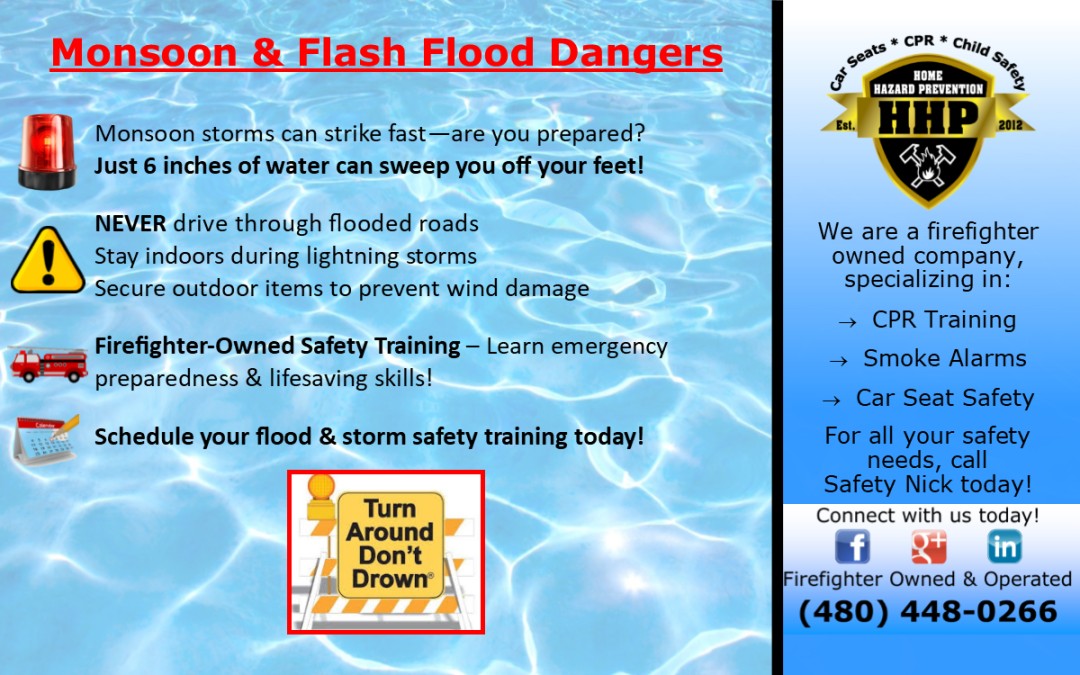
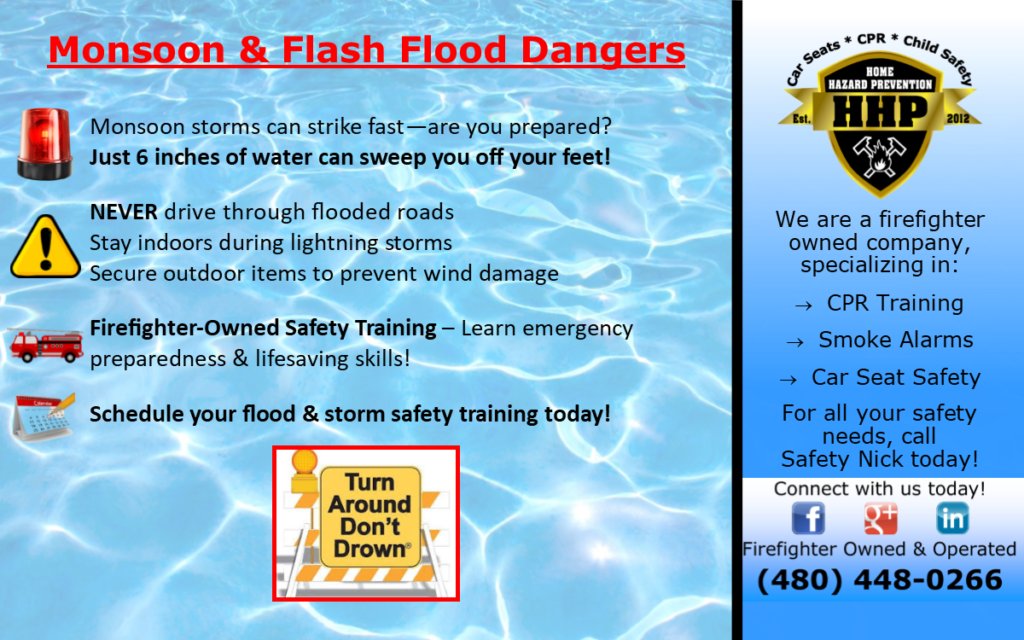
Never Drive Through Flooded Roads
Flash flooding is one of the deadliest monsoon hazards.
Just 12 inches of moving water can carry away a vehicle.
Water depth is often impossible to judge, and road damage may be hidden beneath the surface.
Follow this rule without exception:
Turn Around, Don’t Drown.
Never attempt to drive through flooded roadways.
Monsoon Safety at Home: Protecting Your Family
Storm safety doesn’t end when you arrive home. Lightning, power outages, and strong winds create additional risks.
Prepare Your Home Before Storm Season
Take these preventive steps:
- Secure outdoor furniture and loose objects
- Trim weak tree branches
- Install surge protectors for electronics
- Prepare emergency flashlights and batteries
- Keep emergency water supplies
Power outages can occur suddenly and last for hours.
Preparation keeps your family safe and calm.
Lightning Safety Tips
If lightning is present:
- Stay indoors
- Avoid plumbing and electrical equipment
- Avoid windows and doors
- Wait at least 30 minutes after the last thunder before going outside
Lightning can strike miles away from visible rain.
When thunder roars, go indoors.
After the Storm: Hidden Dangers Remain
Even after the storm passes, hazards can remain.
Be cautious of:
- Downed power lines
- Flooded areas
- Debris on roads
- Damaged structures
Never approach downed power lines. Assume they are live and dangerous.
Why Emergency Preparedness and CPR Training Matter During Monsoon Season
Storm-related emergencies can happen anywhere — on the road, at home, or in public.
Emergencies during monsoons may include:
- Vehicle accidents
- Electrical injuries
- Drowning from floodwaters
- Heat illness after storms pass
- Cardiac emergencies triggered by stress or exertion
When seconds matter, CPR can save a life.
Brain injury can begin in just 4–6 minutes without oxygen. Immediate CPR can double or triple survival chances.
Emergency responders are coming — but you are there first.
Be Prepared Before the Next Storm Hits
Monsoon storms are unpredictable. Your preparation shouldn’t be.
Protect your family by:
- Knowing safe driving procedures
- Avoiding flooded roadways
- Preparing your home
- Learning CPR and emergency response skills
The most important safety tool isn’t in your car or home — it’s your ability to act in an emergency.
# # # # # # #
Safety Nick is a career firefighter and founder of Home Hazard Prevention, LLC — a firefighter-owned safety company serving the East Valley, including Queen Creek, Gilbert, Chandler, Mesa, and San Tan Valley. He provides hands-on mobile CPR training, AED guidance, smoke alarm services, and dryer vent cleaning to help families and businesses prevent emergencies before they happen.
With real-world emergency response experience, Nick brings firefighter-led training and home safety services directly to your location, making preparedness convenient and practical.
Don’t wait for an emergency to wish you were prepared.
Call or text 480-448-0266 to schedule mobile CPR training or home safety services in the East Valley today.
© 2012 – 2026